Signs of an under-slab leak
- A water meter that moves when every fixture is off
- A warm spot on the floor, often over a hot water line
- The sound of running water when everything is off
- Damp or discolored flooring, or mildew smell at the baseboards
- Sudden low hot water pressure
- A higher water bill with no change in use
One sign alone proves little. Together they are strong evidence. Start with the meter test: turn off every tap, appliance and the ice maker, then watch the leak indicator on the meter for fifteen minutes. If it moves, water is escaping somewhere between the meter and your fixtures.
Where slab leaks occur
Pipes under concrete leak at joints, at points where a pipe rubs the slab and at corroded sections. Hot lines fail first because heat accelerates corrosion and expansion. Copper in contact with concrete or aggressive soil can pit. Drain lines under the slab can crack and leak wastewater instead of clean water.
In New England, full slab-on-grade houses are less common than basements. But slabs show up in garages, additions, sunrooms, basement floors with embedded lines and some mid-century houses. A leak in any of them can run hidden for months.
How the leak is located
- Pressure test each branch to find which zone loses pressure
- Use acoustic listening gear on the floor to hear the escaping water
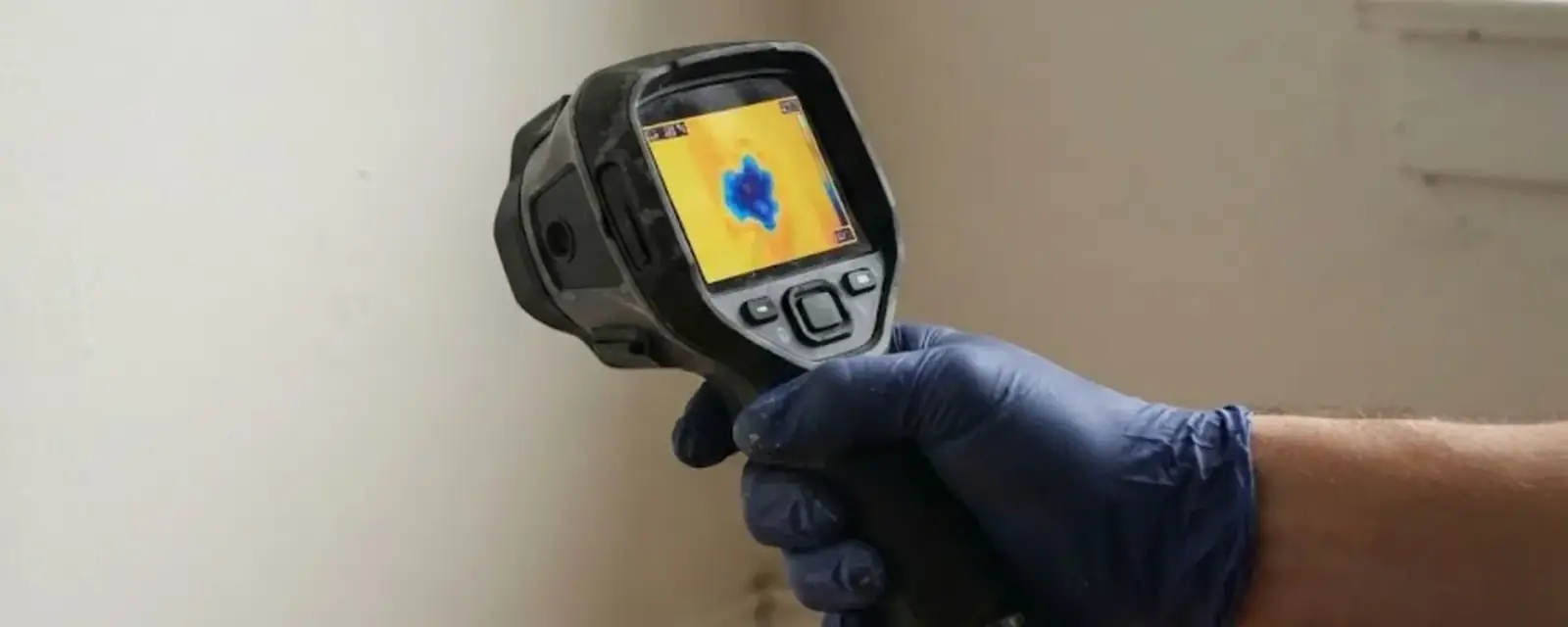
- Scan with a thermal camera for warm spots on hot lines
- Confirm with a moisture meter and, in hard cases, tracer gas
- Mark the spot so the repair opens a small area
Locating the leak before cutting concrete matters. A good detection visit can narrow the leak to a few square feet. The leak detection page covers the tools. A written finding with photos helps with an insurance claim.
Meter spinning with everything off?
Call (339) 216-9771 and ask for a leak detection visit.
Repair options compared
| Option | How it works | Best for | Trade-off |
|---|---|---|---|
| Spot repair through the slab | Cut the concrete at the leak and replace the pipe section | A single leak on an accessible line | Noise, dust and floor patching |
| Reroute the line | Abandon the slab line and run new pipe through walls or ceiling | Lines failing in several places | Some wall opening, avoids the slab |
| Epoxy lining | Coat the inside of the pipe in place | Small pinholes in otherwise sound pipe | Not for severe damage, limited availability |
| Repipe | Replace the whole supply system | Old pipes failing repeatedly | Highest cost, longest fix |
Rerouting is common because it avoids repeated concrete cutting. If several leaks have appeared, the pipe is failing and the repiping page is the next step. A single leak on a good line is a spot repair.
Insurance and documentation
Many homeowner policies cover water damage from a sudden leak but not the cost of the pipe repair itself. Some pay for the access cost to reach a covered leak. Slow, long-term leaks are often excluded. Ask your agent before work starts, take photos, and get a written report with the date and the findings.
If the leak is on the service line before the house, the repair is a different job. See our water service line repair service for buried lines. A leak outside the foundation can look like a slab leak but sits in the yard. Detection visits are available in Woburn, MA and Lexington as well, including for post-war houses and additions.
The first 24 hours after you suspect a slab leak
- Confirm with the meter test and note the reading and the time
- Shut off the main valve if you cannot get detection quickly, and turn it on only when you need water
- Photograph any damp flooring, warm spots or staining
- Move furniture and rugs off wet or warm areas
- Call your insurer to ask how a claim works, then book a detection visit
Turning off the main when you are away slows the damage while you sort out the next step. It also reduces your water bill. A leak that runs for weeks can undermine soil under the slab, so do not wait for it to get worse.
Keep every document. A detection report, photos and invoices help with a claim and with a future sale. If you plan to sell, a clean repair record shows buyers the problem was found and fixed properly.
The repair choice depends on where the pipe is and what it is made of. A spot repair means opening the slab above the leak, fixing the pipe and patching the concrete. A reroute abandons the leaking line and runs a new one through the walls or the attic, which avoids breaking the floor but touches more of the house.
A full repipe is worth considering when several leaks have shown up in the same system. Ask for each option in writing, with the expected disruption and the cost. A good plumber explains why one fits your house better than another and does not rush you into the most expensive choice.
Winchester notes: house types, permits and the water meter
Winchester's older housing is mostly basement construction, with Greek Revival and Italianate houses from the mid 1800s, Queen Anne and Shingle houses from the 1870s on and the Wedgemere district built mostly between 1890 and 1920. Post-war neighborhoods on the West Side, where farms gave way to development after World War II, and later additions are where slab floors are more likely. Check which part of your house sits on concrete.
State consumer guidance says a local plumbing inspector issues the permit before plumbing is altered, replaced or repaired, and that replacing or relocating piping needs one. Rerouting or replacing lines is in that category. Winchester's Building Department lists a plumbing and gas inspector and online permits.
Every gallon through the meter is billed, so a meter that runs with everything off is real money. Ask the Winchester Water Department how to read your meter and whether it can review your usage history.
Under-Slab Leak Repair: local questions
Turn everything off and watch the water meter. If it moves, check for a warm floor spot and listen for running water. Then call for detection.
No. Many are fixed by rerouting the pipe or by a small access cut. The detection step keeps the opening small.
A long-running leak can erode soil and affect the slab. That is why early detection matters.
A spot repair can take a day. A reroute or repipe takes longer. The plumber gives a plan after detection.