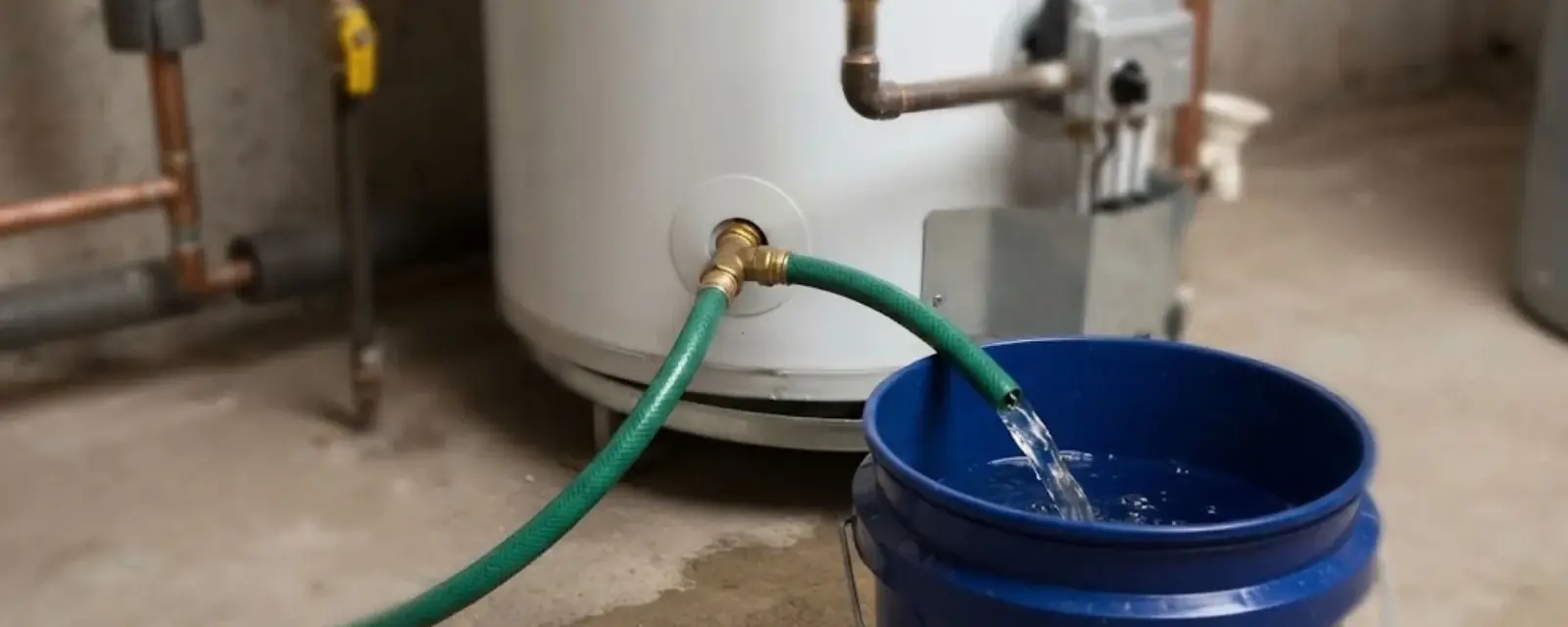
How a hybrid water heater works
A hybrid unit looks like a tall tank with a heat pump bolted on top. A fan pulls room air across an evaporator coil, a compressor raises the temperature of the captured heat, and a condenser coil wrapped around the tank transfers it to the water. Electric elements are built in as a backup for high demand.
Because it moves heat instead of creating it, the unit uses much less electricity than a standard electric tank in the same hours of use. The trade is cost, size and a few site requirements. It also cools and dehumidifies the room around it, which is a bonus in a damp basement and a drawback in a small, cold closet.
What your basement needs for a hybrid unit
- Open air volume, commonly at least several hundred cubic feet, so the unit is not starving for warm air
- Headroom, since hybrids stand taller than a standard tank
- A condensate drain, either by gravity to a floor drain or through a small pump
- A dedicated electrical circuit at the voltage the model calls for
- Room for the filter to be reached and cleaned
Many Winchester houses have full basements, which suits this equipment well. Houses from the Wedgemere period and earlier can have low ceilings and tight mechanical rooms. Measure floor to joist before you shop, and ask a plumber to confirm the clearances. The water heater installation page explains what the plumber checks before setting any unit.
Hybrid, gas and electric tank compared
| Factor | Hybrid heat pump | Gas tank | Electric tank |
|---|---|---|---|
| Upfront cost | Highest | Moderate | Lowest |
| Running cost | Lowest of the three in many homes | Depends on gas price | Highest |
| Venting | None, but needs a condensate drain | Flue or power vent | None |
| Space | Needs open air and height | Standard footprint, needs vent path | Standard footprint |
| Recovery | Slower in heat pump mode | Fast | Moderate |
| Best for | Basements with room, homes without gas | Homes with gas service | Small, low-use homes |
Recovery speed is the one people notice. In heat pump mode the unit heats more slowly, so a household with back-to-back showers may want hybrid mode with a larger tank, or the unit set to a higher-demand mode. Ask the plumber to size from your actual use. The same advice holds for homes in Lexington, MA and Arlington, where basements range from roomy to cramped.
Noise, cold basements and winter performance
Hybrid units hum. A fan and a compressor run in the room, and the sound is comparable to a dehumidifier. If the heater sits under a bedroom, ask where the unit will go. In an unheated basement the heat pump works less efficiently as the room cools, and the unit leans on its electric elements. That is still efficient compared to a standard electric tank, but the savings shrink.
One practical benefit is dehumidifying. A hybrid unit in a damp basement removes moisture as it runs, and that helps a space with seasonal dampness. It does not replace waterproofing. If water enters the basement, see the basement waterproofing page.
Weighing a hybrid unit?
Call (339) 216-9771 and a licensed plumber can look at your space.
Cost factors and payback
Upfront price is higher than a standard tank, and installation can add a circuit and a condensate line. The payback depends on what you pay for fuel now. A home heating water with electric resistance saves the most. A home heating water with inexpensive gas may see a long payback or none.
Ask the plumber for a simple comparison: the installed price of each option, the estimated yearly running cost and the expected life. That is the decision framework. Then ask about rebates before you buy, since they can change the numbers.
Replacement day and the first year
Installation takes longer than a standard swap because of the condensate line and the circuit. Clean the air filter on the schedule in the manual, usually every few months, and flush the tank yearly. If the unit shows an error code, check the manual first and call if it persists. For a failed unit, water heater replacement covers the emergency path.
Questions to ask before you buy
- What is the first hour rating, and does it match how many people shower in the morning?
- How loud is the unit, measured at a few feet, and where will it sit relative to bedrooms?
- Where does the condensate drain, and is a pump needed?
- How do I reach and clean the air filter?
- What does the warranty cover on the compressor and the tank, and for how long?
- Which rebates does this exact model qualify for, and who files the paperwork?
A good installer answers these without hesitation and writes the answers on the quote. If you hear only the efficiency number, keep asking. Efficiency matters, but a unit that is too loud, too small or impossible to service will frustrate you for years.
Plan the maintenance, too. Mark the filter on a calendar, flush the tank once a year and keep the manual with the model and serial numbers. If the unit ever shows an error code, take a photo of the display before you call. It saves a lot of guessing on the phone.
Winchester notes: rebates, permits and water
Mass Save, the statewide energy efficiency program, lists rebates for heat pump water heaters. Terms and amounts change, so check the current program page and ask your plumber which models qualify before you order. Installing the wrong model can cost you the rebate.
Replacement of a water heater is plumbing work in Massachusetts, and state guidance says a local plumbing inspector issues the permit before plumbing is replaced. Winchester's Building Department at Town Hall lists a plumbing and gas inspector and takes permit applications online. Ask your plumber to pull the permit and to confirm the inspection date.
Winchester's water comes from the MWRA system and town reservoirs in the Middlesex Fells. The MWRA community report we reviewed does not list hardness, so test your tap and ask the Winchester Water Department for its latest report. Hard water leaves scale on elements and coils, which shortens the life of any heater.
Heat Pump Water Heater Guide: local questions
Yes, but it works harder. When the room is cold the heat pump loses efficiency and the electric elements add heat. Keeping the unit in a space that stays above roughly 40 to 50 degrees helps. Check the temperature range in the maker's manual.
Yes. The unit removes moisture from the air and produces condensate, which needs a path to a floor drain or a small pump.
You can, though gas tanks are often cheaper to run in homes with low gas prices. Compare costs. A heat pump makes more sense if you plan to remove gas appliances.
Mass Save lists them, with terms that change over time. Check the current program page and ask the plumber about qualifying models.