Where basement water comes from
Water enters a basement in a few ways. Surface water runs toward the house because of grading or clogged gutters. Groundwater rises and presses on the floor and walls. Hydrostatic pressure pushes water through cracks, the cove joint and porous block. Plumbing leaks are the fourth cause, and they are often mistaken for seepage.
Finding which one you have comes first. A leak from a supply line or a drain looks like groundwater but will not follow the weather. The leak detection page covers how to rule plumbing in or out before you pay for drainage work.
Winchester's water and why it shows up in basements
Winchester sits in a valley with the Aberjona River at its center, the Mystic Lakes on its southern border and the wooded hills of the Middlesex Fells rising to the east. Flood events on the Aberjona have damaged homes and businesses in the past, and flood mitigation work has been funded to reduce them. That setting means groundwater and storm runoff are real design inputs for a basement here.
Practical meaning: a basement near the river or on low ground is likelier to see water after heavy rain than one on a hillside. Ask the plumber to look at the lot, the grade and the gutter discharge, not just the wall. The cheapest fix is often outside the house. Homes near the Mystic River in Medford get the same advice.
Start with the cheap fixes outside
- Clean gutters and extend downspouts several feet from the foundation
- Regrade soil so it slopes away from the walls
- Seal visible cracks and cap window wells
- Check that sump discharge does not run back toward the house
These steps will not solve every problem, but they cost little and often reduce the load on a sump. If water persists after that, move on to interior or exterior systems.
Interior drainage and sump systems
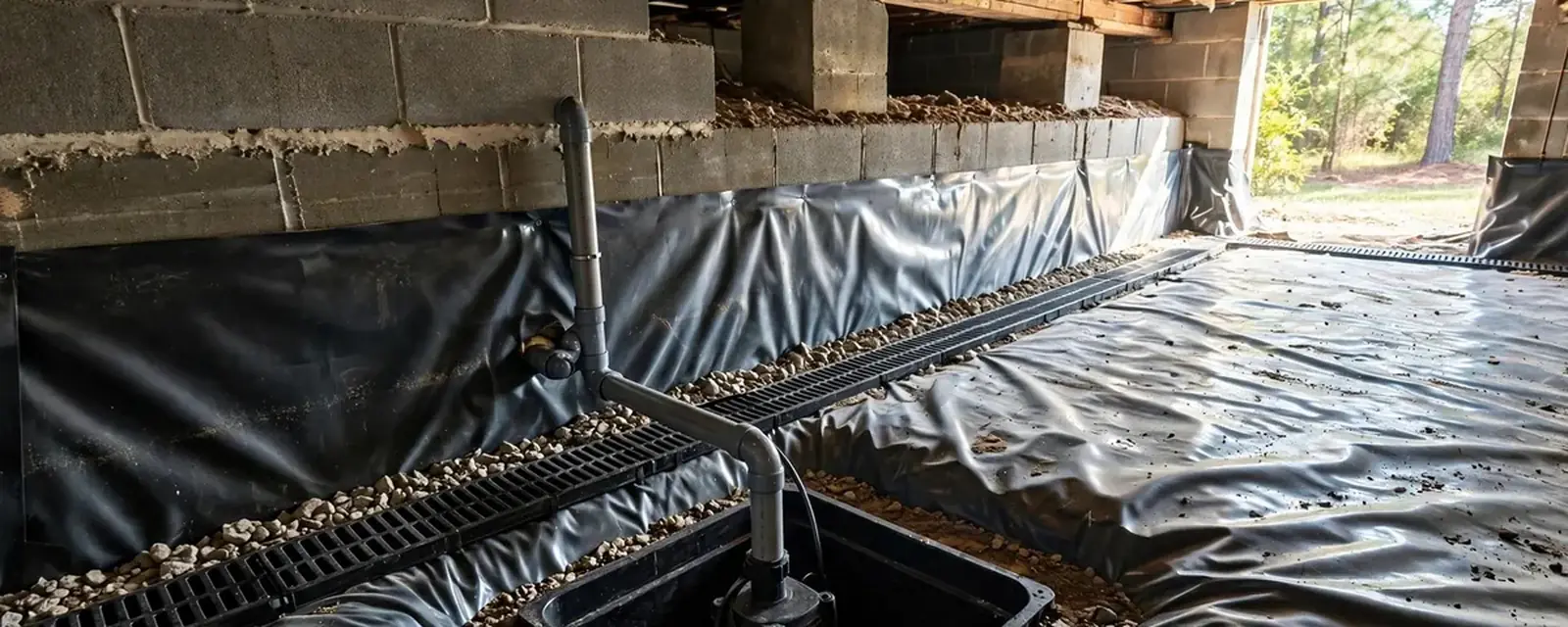
An interior drain system collects water at the base of the wall, in a channel under or along the floor edge, and guides it to a sump pit where a pump sends it out. It does not stop water from entering the wall. It gives the water a path so it does not reach the living space.
This is the most common approach for existing homes because it avoids excavating around the house. It works with a sump pump and ideally a backup. The sump pump page explains the pump side. Ask how the drain connects, where it discharges and what the maintenance looks like.
| Approach | What it does | Strengths | Limits |
|---|---|---|---|
| Interior drain and sump | Collects water at the footing and pumps it out | No excavation, fits finished lots | Does not keep water out of the wall |
| Exterior membrane and drain | Seals the wall outside and drains the footing | Stops water at the wall | Excavation, high cost, landscaping loss |
| Crack injection | Seals individual cracks | Inexpensive for single cracks | Not for widespread seepage |
| Grading and gutters | Moves surface water away | Low cost | Does not fix groundwater |
Exterior waterproofing: when it makes sense
Exterior waterproofing means digging down the outside of the wall, cleaning it, applying a waterproof membrane and installing drain tile at the footing. It treats the cause where it begins. It is also the most disruptive and expensive method, and in an established Winchester yard with mature plantings, tight setbacks and neighbors close by, access can be a challenge.
Choose it when the wall itself is failing, when a basement conversion demands the driest possible space or when an interior system has been tried and failed. Ask for the scope in writing, including backfill, landscaping repair and the warranty terms.
Radon, humidity and finishing a basement
A wet basement often has a humidity problem even after the water is controlled. A dehumidifier with a drain line and a sealed sump lid reduce moisture and mold risk. If you plan to finish the space, test for radon, which is a separate issue from water. A sealed sump pit is often part of a mitigation system, so mention the plan before work starts.
What affects basement waterproofing cost
The range is wide. Factors that set it:
Insurance often excludes groundwater seepage, and a water backup endorsement may cover sump failure. Planned waterproofing is usually paid by the owner. Want your real number? Call (339) 216-9771 and the price is agreed before work starts.
Want a basement assessment?
Call (339) 216-9771 and a licensed plumber can look at the cause first.
Be wary of a quote that skips the diagnosis
A good assessment looks at grading, gutters, the wall, the floor and the plumbing before a method is named. Beware of any quote given in five minutes with no site visit, or one that pushes the most expensive method for every house. Ask for two options when there are two, and ask what happens if the system fails during a storm.
In Massachusetts, the state plumbing code at 248 CMR 10.00 sets the rules for installation and repair, and licensing comes from the Board of State Examiners of Plumbers and Gas Fitters. Permit rules vary by job, so ask the Winchester Building Department or your plumber what applies to yours.
Written by the Winchester Pro Plumbing team.
Basement Waterproofing questions in Winchester
No. Dampness from humidity or condensation is different from water entering through cracks or the floor. A moisture test and a look at the weather pattern help tell which one you have.
Not always. Many basements can be managed with gutter work, grading and an interior system. Exterior work is for failing walls and demanding uses.
If the water is groundwater, a sump with a drain often does. If surface water or a plumbing leak is the cause, it will not.
Not usually. Mold remediation is a separate service. Stopping the moisture is the first step.
Plumbing leaks continue in dry weather, and groundwater follows rain. A meter test and a leak detection visit can rule plumbing out.