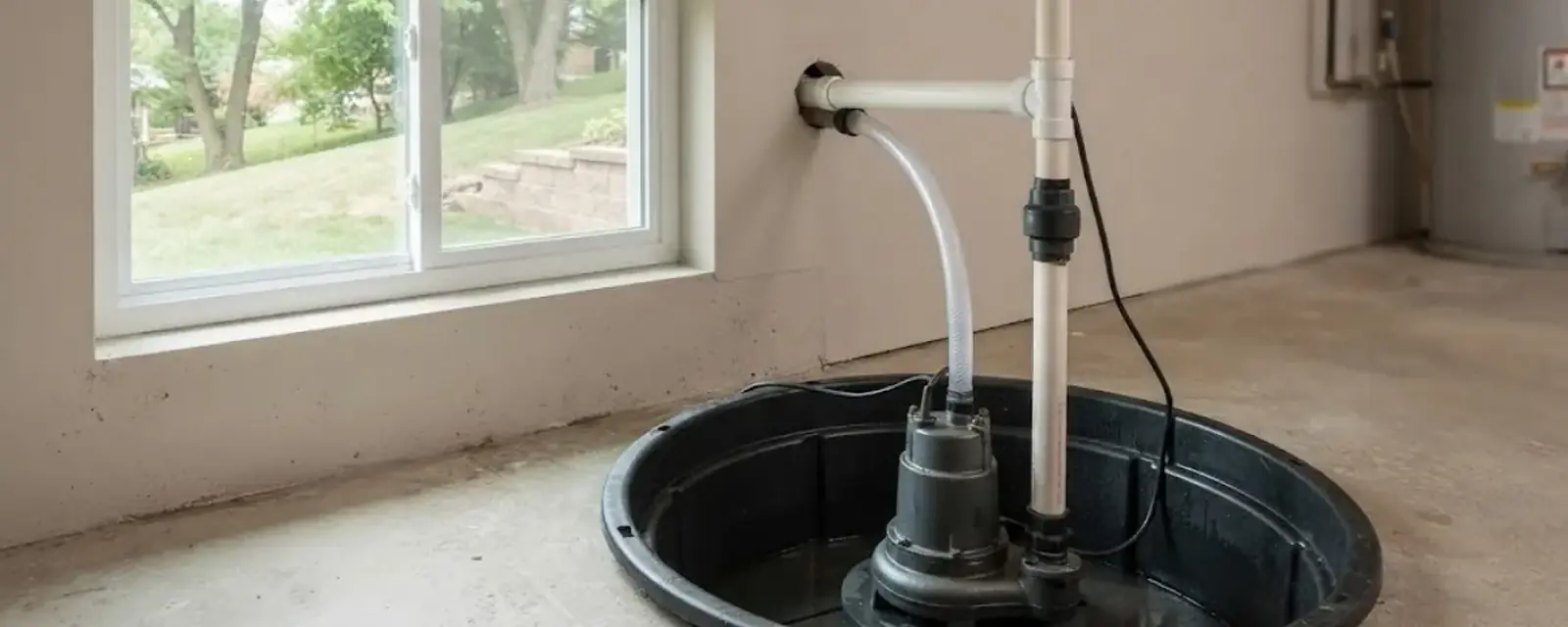
The parts of a sump system
A sump system has five parts. The pit is a lined basin set in the floor at the low point. The pump sits in the pit and runs when a float switch tells it the water is high. A check valve on the discharge pipe stops water from running back. The discharge line carries water outside. A backup pump and an alarm protect you when the main pump or the power fails.
Skimping on any of these is how basements flood. A pump with no check valve cycles over and over. A discharge pipe that ends at the foundation recirculates the water. A system with no backup fails in the same storm that cuts the power.
Choosing the pump
| Feature | Submersible | Pedestal |
|---|---|---|
| Where the motor sits | In the pit, under water | Above the pit on a column |
| Noise | Quieter | Louder |
| Life | Often shorter in debris, strong in clean pits | Often longer if kept dry |
| Price | Higher | Lower |
| Best for | Finished basements, tight pits | Unfinished basements, narrow pits |
Horsepower matters less than people think. A one-third horsepower pump is typical for a house. What matters more is whether the pit is sized to avoid short cycling and whether the pump is rated for the vertical lift and discharge distance.
Cutting the pit and sealing the floor
The plumber cuts a circle in the slab, digs the pit, sets a liner with stone beneath it and patches the concrete around the rim. A sealed lid reduces humidity and keeps radon from entering the room. If you plan to finish the basement, mention it before installation so the lid and the discharge are in the right spot.
If an interior drain runs along the wall, it connects to the pit. That is how the system collects seepage from the whole perimeter. The basement waterproofing page compares interior and exterior approaches.
Discharge: where the water goes
The discharge line should run to a spot well away from the foundation, ideally downhill, with a slope that avoids freezing. Use a check valve near the pump. Do not connect the discharge to the sanitary sewer, because that adds a flood load to the town system and is prohibited in many communities. Do not discharge to a neighbor's yard.
In winter, the end of the discharge can freeze and block the pump from emptying. A frost-proof outlet or a discharge that drains downhill helps. Ask the plumber how freezing is handled, since New England winters are long.
Need a sump pump installed?
Call (339) 216-9771 to schedule a visit with a licensed plumber.
Backups, alarms and testing
- A battery backup pump on its own float and its own discharge, ideally
- A high-water alarm that sounds or sends an alert to your phone
- A test routine: pour a bucket of water in the pit twice a year
- Battery replacement on the schedule in the manual
Backups need care. A battery that sat for years will not carry a long outage. If your basement has finished space or stored valuables, the backup is worth it. For repairs and troubleshooting of an existing system, the sump pump repair page covers the common faults.
What a quote should include
A written quote should name the pump model, the pit size, the check valve, the discharge route and length, the alarm and the backup. It should say who repairs the floor and who handles a permit if one applies. Get two quotes and compare the details, not just the totals. The same questions apply in Woburn and Arlington, where the Aberjona and Mill Brook shape local groundwater.
A year-round maintenance calendar
- Spring: pour water in the pit and watch the pump cycle, then clear the discharge outlet of leaves and debris
- Early fall: test again, check the float for free movement and inspect the check valve for leaks
- Before winter: confirm the discharge line drains and cannot freeze solid
- After any big storm: check the pit for silt and the alarm for a stuck float
- Every few years: replace the backup battery according to the manual
Most pump failures are not sudden. A pump that is noisy, runs longer than it used to or short cycles is telling you something. Replace it before the storm, not during it.
Think about power, too. If outages are common on your street, a battery backup or a small generator with a transfer plan keeps the system running when you need it most. Ask your plumber what fits your panel and your budget.
Budget for the whole system, not only the pump. The pit liner, the check valve, the discharge pipe, the alarm and the backup all add up, and a low quote that leaves out half of them is not a low quote. Ask each plumber to list the parts by name and to say where the water will go once it leaves the house.
A discharge that dumps beside the foundation just cycles the same water back into the pit. Take a few photos of the finished installation, including the pipe route outside, and save them with the receipt. They help with the warranty and with any later repair.
Winchester notes: flood history, discharge rules and permits
The Aberjona River flows through Winchester, and local reporting from December 2013 cited five damaging floods since 1996 and state funding for flood mitigation. The setting is a good reason to install a sump with a backup rather than a single pump, especially in basements near the river valley.
Where discharge may go is a local question. Ask the Winchester Department of Public Works where sump pump discharge is allowed and whether any connection to the sanitary sewer is prohibited. We did not find a published Winchester rule on the pages we reviewed, so confirm it with the town and do not guess.
Plumbing connections for a sump system are plumbing work. State consumer guidance says a local plumbing inspector issues the permit before plumbing is installed or altered, and permits are issued to licensed plumbers. Winchester's Building Department lists a plumbing and gas inspector and online permit applications.
Sump Pump Installation: local questions
Deep enough that the pump does not short cycle, commonly 18 to 24 inches. A plumber sizes the pit to the pump and the inflow.
It adds cost for the second pump, the battery and the alarm. For a finished basement it is a modest price against flood losses.
Ask the Winchester Department of Public Works. Many communities prohibit it, and a plumber can route discharge to a permitted outlet.
A new pit and pump typically take a day. Interior drains, wall work and electrical add time.