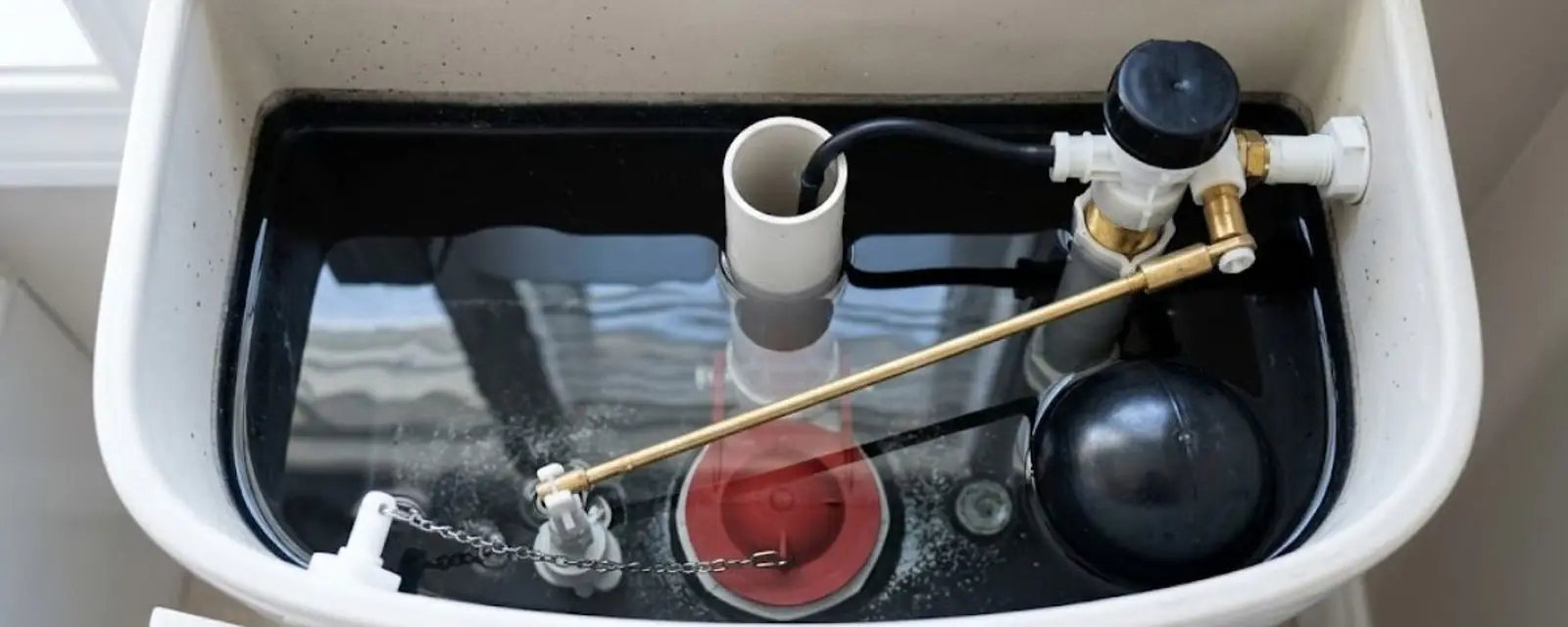
First, stop the overflow
If the bowl is rising, take the tank lid off and push the flapper closed or lift the float. Turn the shutoff valve behind the toilet clockwise. Do not flush again. Put towels on the floor and wait for the water to settle before trying anything.
If the bowl is full but steady, you have time. If it is already spilling, shut off the water first. A flooding toilet is covered on the toilet repair page, including what to do when a plunger does not help.
Step one: a flange plunger
The right plunger has a rubber flap or sleeve that folds out below the cup. That shape seals in the toilet drain. A flat cup plunger made for sinks does not seal well. Place the plunger so the sleeve sits in the drain opening, press gently to push out the air, then pump firmly with the seal held for ten to fifteen strokes.
Pull up sharply at the end. The suction on the pull stroke often does as much work as the push. If water drains, flush once to test. If it rises, stop and try again with the bowl lower, not higher.
Step two: hot water and dish soap
For a soft clog of paper, pour a squirt of dish soap into the bowl and let it sit for ten minutes. Then add a bucket of hot tap water poured from waist height. Do not use boiling water. It can crack porcelain and soften wax rings. The soap lubricates and the weight of water adds push.
Step three: a toilet auger
| Tool | Use | Avoid |
|---|---|---|
| Flange plunger | First choice for most clogs | Flat sink plunger |
| Hot water and dish soap | Paper-based clogs | Boiling water |
| Toilet auger (closet auger) | Objects and stubborn clogs | A regular drain cable that scratches porcelain |
| Wet and dry vacuum | Water-filled bowl, some plastic items | Dry mode on a wet bowl |
| Chemical drain opener | None | Always avoid in a toilet |
Feed the curved head of the auger into the bowl outlet, crank the handle while pushing gently and then pull back. The rubber sleeve protects the porcelain. If you hit resistance and cannot break it, stop. A toy, a pipe cleaner or a hard object may be lodged, and pulling the toilet is the next step.
Toilet still blocked?
Call (339) 216-9771 and a licensed plumber can take it from here.
Signs the clog is not in the toilet
- Water or gurgling in the tub or shower when you flush
- Other fixtures draining slowly
- A basement floor drain that bubbles
- The toilet clogs again right after clearing
- A sewage smell
These point to the branch or the main line. A plunger cannot fix them. See the drain cleaning page for branch problems. Repeated clogs in one toilet can also come from a worn fixture or a partial blockage, and a camera inspection finds out which.
What not to flush
Wipes labeled flushable are the leading cause of clogs and sewer backups. They do not break down like paper. Cotton swabs, floss, feminine products, paper towels and cat litter all cause trouble. Only human waste and toilet paper belong in the bowl. If you are on a shared stack, one neighbor's habits can cause your clog. Shared stacks in the Arlington service area and Woburn buildings work the same way.
Preventing the next clog
- Use less toilet paper per flush, and flush twice for large amounts
- Keep a lidded trash can next to the toilet so wipes and swabs have somewhere to go
- Teach children that toys and extra paper do not belong in the bowl
- Clean the rim jets with a small brush and vinegar if the flush looks weak
- Replace an old toilet that clogs often, since a modern one flushes with less water and more force
A toilet that clogs once a month is not a plumbing mystery. It is usually the toilet, the paper or the habits. A newer model with a better trapway often fixes it. If a new toilet clogs too, the problem is in the drain, not the fixture.
If you replace a toilet, check the rough-in measurement from the wall to the center of the drain, and check the flange height. A flange that sits too low or a wax ring that is poorly seated causes leaks that look like clogs.
A flange plunger is the tool to buy, and it is worth keeping in the bathroom. It has a soft rubber extension that seals the toilet drain, so the push moves water through the trap instead of splashing around the bowl. Fill the bowl partly with water if it is low, seat the plunger firmly, and push and pull with steady strokes without lifting the cup.
After ten or so strokes, break the seal and see whether the water drops. A toilet auger reaches further when a plunger cannot. If the toilet is overflowing, close the supply valve behind it first, and do not flush again until the bowl has emptied.
Winchester notes: permits and when a toilet means more
State consumer guidance says clearing a blocked drain is a minor repair that needs no permit, while replacing a fixture does. If your clogged toilet turns out to be cracked or needs a new flange, replacement is plumbing work to be done by a licensed plumber with a permit from the local inspector. Winchester's Building Department lists a plumbing and gas inspector.
Winchester's older houses, including those in the Wedgemere Historic District built mostly between 1890 and 1920, may have toilets installed decades ago with a different rough-in and iron drains below. A toilet that keeps clogging in such a house is a reason to ask for a camera look at the line.
We found no hardness figure for Winchester in the MWRA community report, so if mineral buildup is clogging the rim jets, test your tap and ask the Winchester Water Department for its report.
What to Use for Toilet Clogs: local questions
A flange plunger works much better because it seals in the toilet drain. A flat plunger is for flat drains such as sinks.
No. Chemical cleaners can damage the bowl and splash. They are also hazardous if the clog does not clear and you need to plunge afterward.
Several fixtures slow down together, or a basement floor drain backs up. That is a main line sign.
A slow toilet can wait for a daytime visit. A bowl that will not drain or an overflow should not.