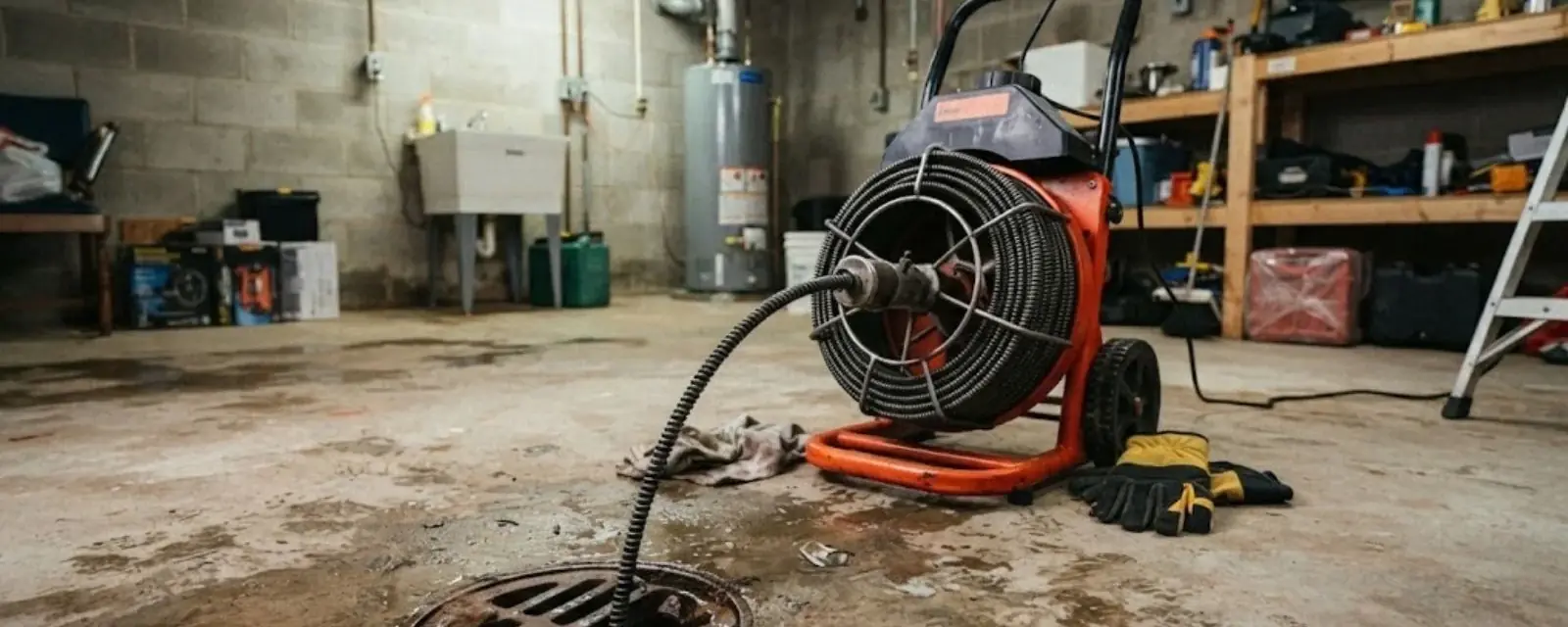
Types of drain snakes
| Tool | Best for | Notes |
|---|---|---|
| Plastic drain strip | Hair in bathroom sinks and tubs | Cheap, disposable, fits pop-up drains |
| Hand-crank auger, 15 to 25 feet | Sinks, tubs, showers | Most common household tool |
| Toilet auger (closet auger) | Toilets only | Has a rubber sleeve to protect the bowl |
| Power drum machine | Kitchen lines, main branches | Heavier cable, plumber use |
| Sewer machine with cutter heads | Main lines with roots | Plumber use only |
The household tools are enough for most single-fixture clogs. The big machines are for main lines and for situations where the clog sits further away than a hand tool can reach. Renting a power machine is possible, but the cable can snag, spin and injure a hand, so most homeowners are better served by a plumber for those jobs.
How to snake a sink or tub
- Remove the stopper and clean what you can see
- Feed the end of the cable into the drain, turning the crank slowly
- When you feel resistance, keep turning to hook or break up the clog
- Pull the cable back slowly, with a bucket or rag ready
- Run hot water to flush and test the flow
Do not force the cable. If it stops hard, it may have reached a bend or the trap, and forcing it can kink the cable. Back off a bit, turn and advance again. Wear gloves and put down newspaper. A smelly cable is a normal outcome.
Toilets need the right tool
A standard cable can scratch porcelain. A toilet auger has a curved head and a rubber sleeve that guides it through the trap without damage. Insert the head, turn the handle while pushing gently and pull back. If a toilet auger does not clear it, the blockage may be further down, and the toilet is not the issue. The toilet repair page covers overflow steps and repairs.
Cable stuck or clog came back?
Call (339) 216-9771. A licensed plumber can clear it and find out why.
When to stop and call
- The cable will not advance past a certain point
- You clear the clog and it returns within days
- Several fixtures are slow or a floor drain backs up
- You hear gurgling from other drains when you run water
- There is a sewage smell
These signs point to a main line or a damaged pipe. A cable cannot fix a collapsed section or a joint full of roots, and pushing hard may make things worse. Read sewer line cleaning for main line problems and ask about a camera inspection.
What a plumber does differently
A plumber uses a larger cable with cutting heads, a camera to see what is in the pipe and, when needed, a jetter to scrub the wall. The most useful thing is information. After clearing, the plumber can tell you whether the clog was a one-off or a symptom of a damaged pipe. That shapes what you should do next.
If you keep paying to snake the same drain, ask about a camera look and consider drain cleaning with jetting. Repeat snaking costs more than finding the cause. Callers in Arlington, MA and Lexington get the same cleaning and camera follow-up.
Common mistakes with a drain snake
- Forcing the cable when it stops hard, which kinks it or damages a trap
- Using a regular cable in a toilet and scratching the porcelain
- Pulling the cable out fast and spraying dirty water
- Leaving the cable wet in storage, which rusts it
- Using it after pouring chemical cleaner into the drain, which is hazardous
After each use, rinse the cable with a hose, dry it and keep it coiled in a bucket with a little oil on the cable. A rusty cable scratches pipe walls and breaks more often.
A cable that gets stuck is a sign to stop and call. Pulling hard may snap it inside the pipe, which leaves a plumber with a bigger problem than the original clog. Say honestly what happened when you call, because it helps the plumber choose the right tool.
Choose the right tool for the drain. A short hand auger suits a sink or a tub. A longer cable on a drum suits a main line, but it takes practice and can damage old pipe if it is pushed too hard. Wear gloves and eye protection, lay down towels and keep a bucket handy. Feed the cable slowly while turning the handle, and let the cable do the work.
When you feel the resistance give way, pull back gently and run water to see whether the drain has cleared. If water backs up again soon after, there is more behind it, and that is a good point to call for a jetting or a camera inspection.
Winchester notes: licensing, permits and older plumbing
Massachusetts consumer guidance says only licensed master or journeyman plumbers, with permits from the local plumbing inspector, may do plumbing work, and that minor repairs such as clearing a blocked drain do not need a permit. A homeowner snaking a sink is doing a minor job. A plumber replacing a drain line is not.
You can verify a plumber's license through the Massachusetts Board of State Examiners of Plumbers and Gas Fitters, by phone or through its online portal. The license type and number should show on any sign or advertisement.
Winchester's older homes, including those in the Wedgemere Historic District built mostly between 1890 and 1920, can still have original iron or clay drain lines. Rough pipe catches debris, so a clog in such a house may return. If a snake clears it only briefly, ask for a camera inspection.
Drain Snake Guide: local questions
It can if forced. Turn slowly, do not push when resistance is strong and never use a power cable on fragile pipe. A toilet needs a closet auger to protect the porcelain.
For a sink or tub, 15 to 25 feet is plenty. Longer clogs need a plumber's machine.
The cable makes a hole in the clog but may leave buildup on the pipe wall. Hydro jetting or a repair can fix the cause.
No. State guidance says clearing a blocked drain is a minor repair and does not need a permit.